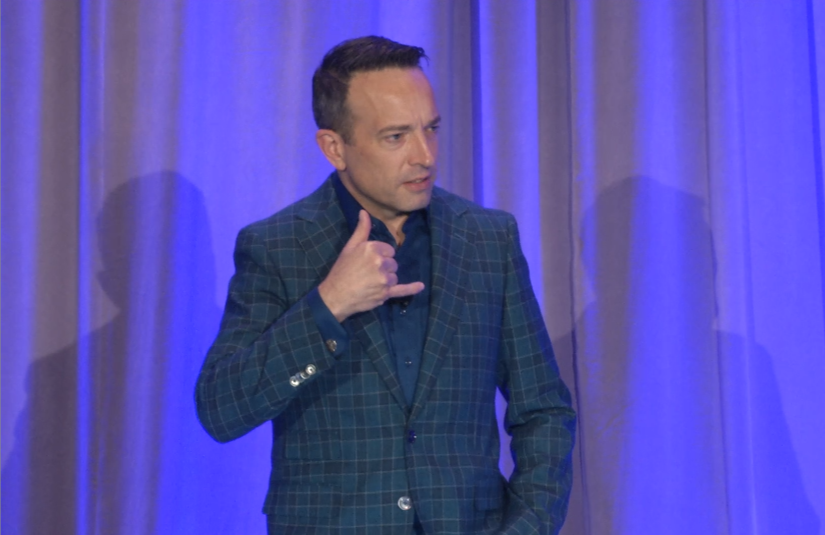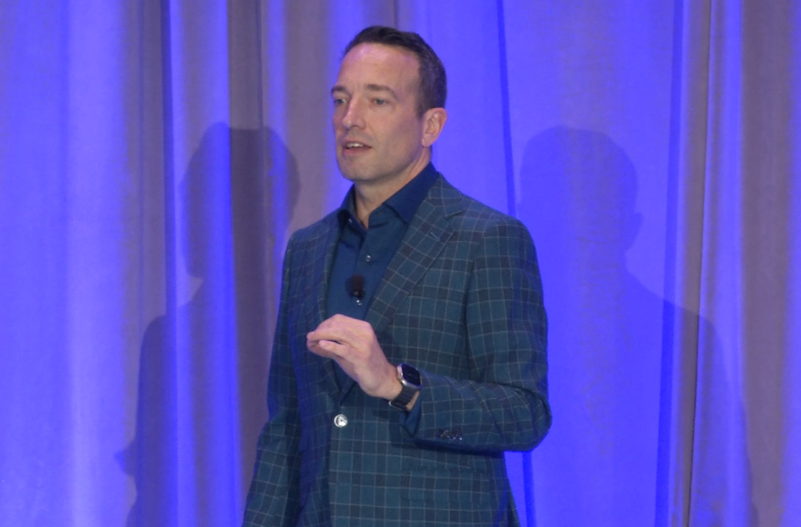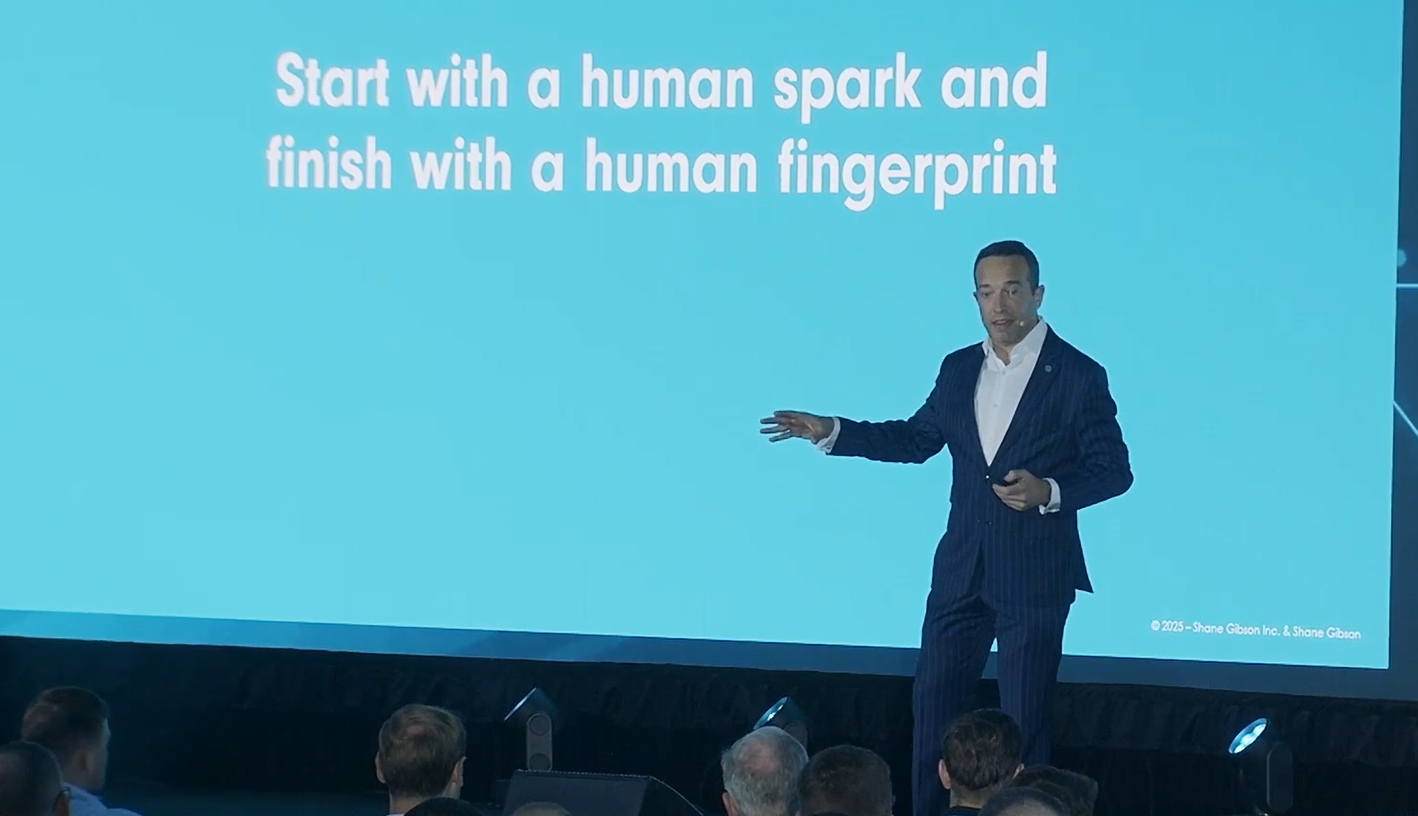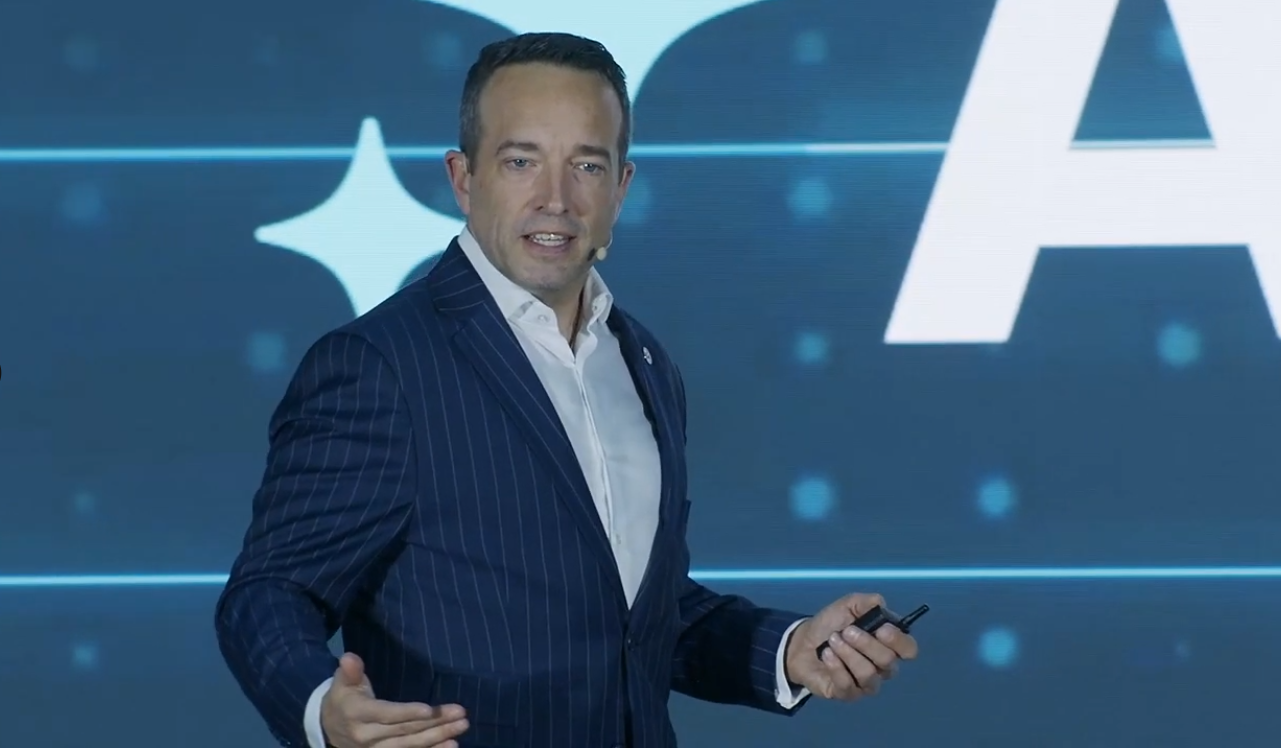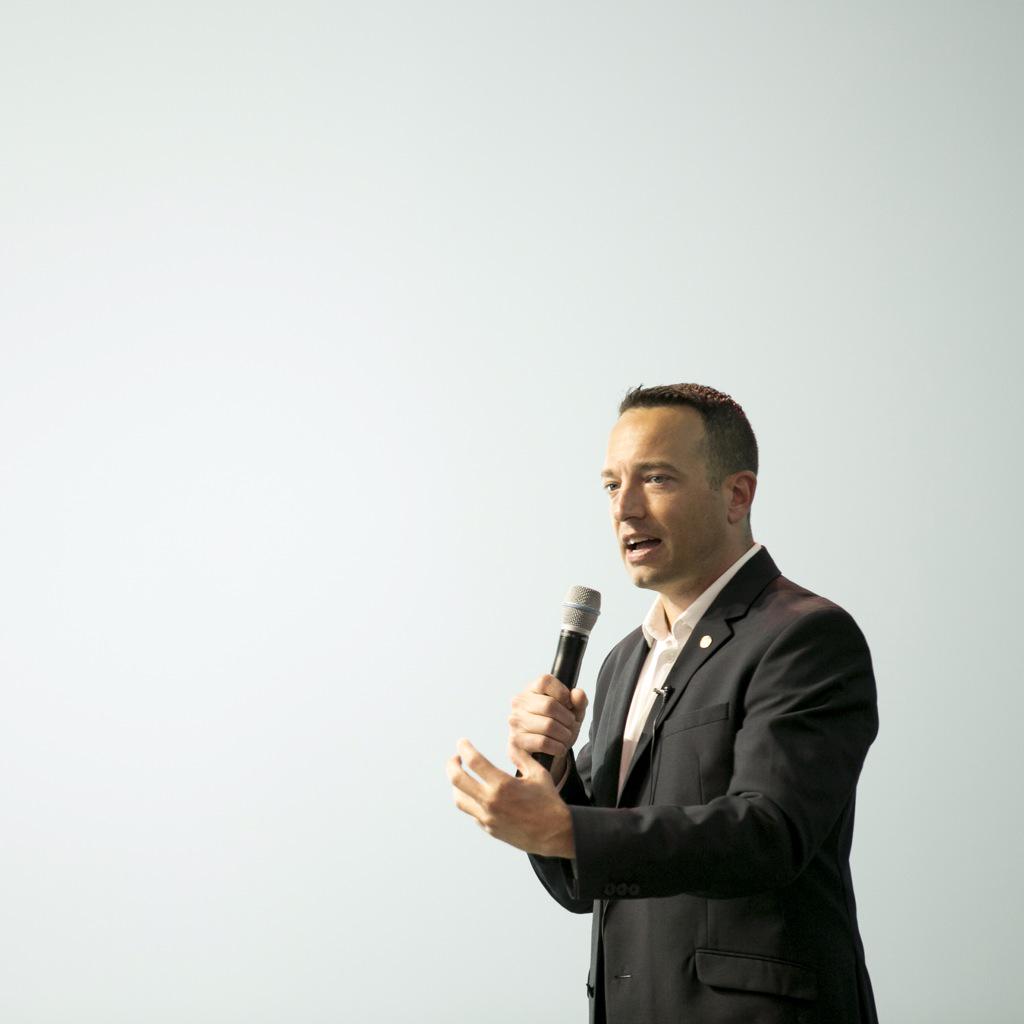
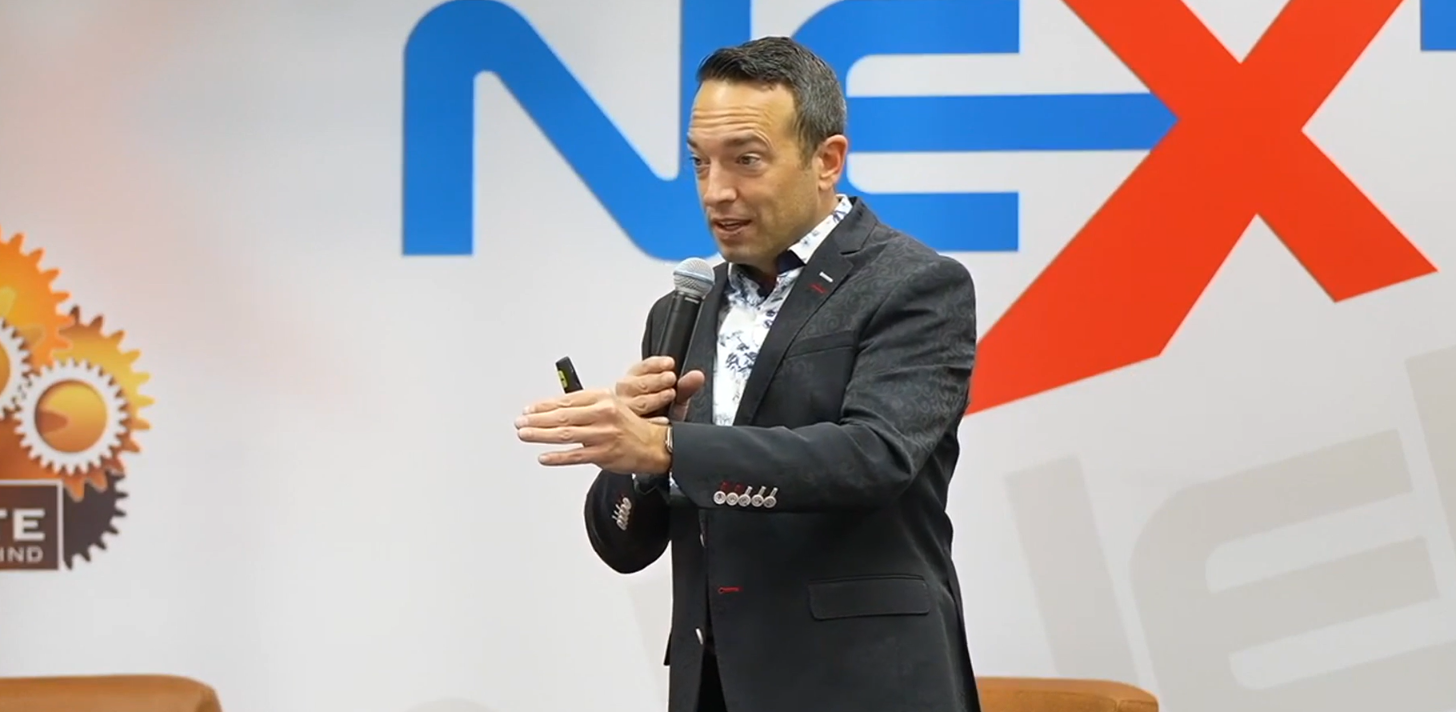
We all know the importance of follow-up in sales and in life. Shane presents a straight forward process for ensuring that we follow-through with our key accounts.
Goal Setting Video - This sales blog entry is the full 30 minute keynote by Shane Gibson
This sales video blog entry is the full keynote seminar version on the previous 3 minute preview posted on June 27th. I had a number of people ask for access to the full seminar. This is posted in Google Video format as youtube will not accomodate files longer than 10 minutes. Enjoy! - Shane Gibson. http://www.salesacademy.ca
This video was shot in 2007. It's a clip of an anecdotal story that Shane Gibson tells about how frequent contact and creativity can help close the deal.
Setting and Achieving Powerful Goals - Video of Shane Gibson.
This video was shot in January 2007 at the Vancouver Board of Trade's Leaders of Tomorrow Conference. This is a 3 minute clip. (actual key-note seminar was 30 minutes)
Psychologists and assessment tool experts have identified a number of qualities that top producers must possess. I personally believe the two most important qualities are empathy and ego drive.
You must differentiate between empathy and sympathy however. Empathy is not feeling sorry for someone. It is putting yourself in the other person’s shoes, and being instinctively able to see, hear and feel where that person is coming from. It does not mean you agree with the other person, it means you have an understanding of that person’s perspective, and that you can adjust your approach and feedback to that person instantly.
Ego drive, on the other hand, is the measurement of how fast you recover when you get knocked down, or after you have been rejected. If you immediately dust yourself off and get back up then you have a high level of ego drive. A Financial Advisor with a high level of ego drive possesses an inherent focus and drive to make the sale, reach the goal, finish the task or conquer a difficult situation, and this is imperative. The need to accomplish, conquer and win keeps them motivated and focused on achieving results.
The fact is that Financial Advisors fail more often than they succeed. High ego-driven people are usually not shattered by failure, in fact they find that a failure or setback to them is just a challenge and handling challenges are what makes them happy. They live for the challenge and they live for the conquering, so when that one in 10 client says ‘yes’, the path of rejections is justified.
The two main qualities of empathy and ego drive must be balanced. If a Financial Advisor is high on empathy and low on ego drive, clients will think he is a great person, and really like that individual. But they may end up buying from the competitor, because the Financial Advisor got so engulfed in seeing and accepting the client’s point of view that she/he did not present the best solution, and did not close the transaction.
A Financial Advisor with high ego drive, but no empathy will often be so focused on driving through to the close of the deal he/she will not take into consideration or demonstrate respect for the client’s real needs, views and wants. This type of Financial Advisor often loses the sale and does not understand why. He/she can also negatively affect his/her reputation and that of the company he/she works for.
In essence you need a high level of empathy and a high ego drive to be a top producer. A Financial Advisor with only one of these traits can still be an F.A., and may achieve a sufficient level of sales. But if he/she is low in either empathy or ego drive, and makes a commitment to developing the right attitudes, skills and habits, he/she may become a top achiever.
Sales Blog Entry - Dealing with Top Level Decision Makers - Insurance Sales
Insurance Sales /Financial Advisor Tips by Bill Gibson
Would you like to have more AAA Clients in your portfolio this year? If you do, this article and next month’s article could be of assistance. In dealing with “Top Level” Decision Makers there are some subtle differences that Top Producers utilise and that I personally have experienced results by using. Here they are.
¨Be a Business Person not just a Financial Adviser who is selling. You must be seen as a Problem Solver and a Solution Provider focused on the Clients personal and corporate Top, Middle and Bottom Line. Learn the language and “ins and outs” of his or her profession or industry. That way you will be viewed as a business associate.
¨Develop Rock Solid Confidence and Demonstrate it, but don’t be arrogant. You can develop that confidence by
■Meeting and being with and continually networking with top people in your own organisation, in outside organisations and with organisations that you already have “Top Level” people as clients or friends. This way you become more comfortable with Top Executives, Successful Entrepreneurs and Professionals. It just takes awareness and practise. Investing all your spare time with “non-top level” people won’t get you there.
■Go see “top people” when they are speaking at functions. Look further into the subjects and topics they are interested in or speak about. This way, the language and interests of the day of “Top Level” people will become part of your language and interests. They will view you as an associate.
■If the “Top Level” speaker / executive is a client you’d like to have, be sure to ask an extremely pertinent wise question. He or she will remember you and so will many of the “Top Level” people in the audience. You will get approached or acknowledged afterwards during the social period. It creates “Top Level” opportunities.
¨Be open and ask for the experiences, thoughts and advice of “Top Level” people. For one thing, you’ll learn and on the other hand they don’t like to be taught … they are used to advising and teaching and like to give their opinions. Once you’ve listened to them they become open to listen to you. Respect earns respect.
Top producers maximise their return on investment on their Time, Energy and Abilities. They work smarter not just harder. Over the next few articles we’ll explore proven ways that you can work smarter by getting your best Return On Investment of you Personal Time, Energy, Ability Assets.
•Make sure you are in front of clients during your “up” periods during the day and evening. Monitor yourself for a few days and you will discover that at certain times of the day and evening you are more energetic and alert. A morning person should probably be in front of clients and completing important tasks from 6:00am – 1:00pm and then during his/her second wind from 5:00pm – 7:00pm. The night hawk will do well from 11:00am – 5:00pm and from 8:00pm – 11:00pm. Consider this to get your best ROI on your time, energy and ability.
•Try not to drift, dream or drown. Continually ask yourself “What is the best use of my time, energy and ability right now?” Put this questions on your screen saver, on your fridge, in your car and at your desk.
•Have at least 70% of your next week booked with clients and prospect appointments by Thursday of the week you are in. Review what you are going to do tomorrow, the night before. Your subconscious will work on it during the night and you will wake up focused and on a “roll”.
•When setting an appointment on the phone “clear your desk and set up the names of the people you wish to call and “time block” a specific period of time to hit the phone and don’t stop until the time is up.” This gives you time to gain momentum. Momentum is one of the key factors in sales.
•Say “no” more often, especially to requests that take you away from your main business focus and personal goals. Ask, “How will my saying “yes” affect me, my career, my family, my clients and other important people close to me?” If it is negative … don’t do it.
I attended Peter Thomas’ Life Pilot program yesterday at the BC Sports Hall of Fame. The session was facilitated by Ray Williams of PCMG Executive.Ray is a regular contributor to the National Post and President of the International Coaching Federation’s Vancouver Chapter.
Life Pilot is a program designed to help you identify your values and align your life’s path, goals and daily actions with your core values.Several years ago I got certified by the Consulting Resource Group as a facilitator in their assessment tools and indicators, one of them being the Values Preference Indicator.
Although I’ve run dozens of values based programs myself, I must say that the format of the Life Pilot program and Ray’s life experience really helped me revisit my values as if it were the first time I had gone through the process.I left with a fire in my belly and a renewed energy.I set some new goals and dusted off some old ones ready to give it another go.
The content of the program was solid, and proven by Peter Thomas (founder of Century 21 Canada and Life Pilot) and is culmination of values based lessons and principles gathered from decades of business experience, and interaction from multimillionaires, billionaires, Olympic athletes and social entrepreneurs.
I had two critical mentors at a turning point in my life which was Jim Janz and Fred Shadian.Jim a successful entrepreneur in the Direct Sales industry and Fred a peak performance specialist and accomplished record breaking martial artist.These two guys couldn’t be further apart in a career and social aspect, yet both of them pushed me in the same way, to dig deep and really go after what inspires me.
Jim with his booming voice and presence believed in me and pushed me to reach for my dreams, Fred really pushed me to get to know myself, my talents and get in tune with my inner compass. Thinking back, if these two people weren’t there to help “Pilot” my path I wouldn’t where I am at today.
If you don’t have a Jim or a Fred (and even if you do) this type of program would be a great investment. Why I share this is I believe whether it’s with Ray Williams and Peter Thomas or your own personal mentor or coach everyone needs to take a time out and visit their values and purpose. On purpose people are healthier, wealthier and full of life.
Here’s a couple resources you can access to get started in aligning your values and life path:
Edification is what they refer to it as in the direct sales industry. When selling in a team, edification or promotion of our team mates ensures that the whole team can contribute to closing the deal and servicing the client.
Every team has a rainmaker, or star and they ’re often the senior sales rep, sales manager, or even the CEO. In complex or high level project selling, these stars need the whole team to collaboratively sell and service the client.
Too often the lead seller and provider dominates the pitch when courting the client, and then later on they wonder why the rest of the team can ’t do their part and close the deal. If you ’re the point person in a team sell, make sure you known why everyone of your team mates is talented and important to the deal, and the client. Most importantly find tasteful and timely ways to demonstrate their purpose and importance to the client and the success of the solution when presenting your product as a team.
Every sales person and executive has experienced meetings where one person dominates the sale in a team sell format. They sometimes neglect to tell the client, why they even brought their team mates, and what they can do for them. Then they expect the team to have the credibility needed to close the deal and service the client.
By knowing the value of each team member and discussing as a team how we can maximize everyone ’s profile we allow the whole team to contribute to closing the deal. This strategy also takes the weight off of the CEO, Sales Manager, or Senior Sales Rep. It all comes back to the question “imagine what we could achieve if we didn't care who got the credit.”
It is not uncommon for salespeople and/or sales managers to get caught in the throes of everyday problems and miss seeing the trees because of the forest. In most cases there is much more support and help around us than we can see. If most of us could really appreciate what we do have, and be grateful, most of the time we would never have a motivation problem.
There is power in gratitude. For example; Have you ever been forced into giving a kiss and a hug to a relative or a friend of a friend you couldn’t stand? It’s not an inspiring experience. As a matter of fact, it can be downright de-motivating. But if you have ever been asked to hug and kiss someone you secretly admired, I bet you found it to be a very pleasant experience. What’s the difference between the two? Having to embrace someone you can’t stand, can be de-motivating; embracing someone you admire is motivating.
The same rule applies to situations. Most of us spend time living for tomorrow; living for when we will get that raise, that job, that relationship, or that home. In other words, that’s when we will be happy. We don't like where we are now, so let us dream about tomorrow. What this means is we are not living in the now. It also means we often set our objectives or goals from a time, place, or state of mind that we do not like, which means we don’t embrace it. Therefore it is de-motivating.
What if you could appreciate the moment and embrace it? It would be inspiring, just like embracing that person you admired.
Gratitude is a powerful motivation. To embrace or appreciate the moment you are in, gives you a deep settled strength, and alleviates anxiety. With this strength you are able to tap into your intuition and be directed into paths that are more meaningful and in tune with who you are. This makes it much easier for you to become enthusiastic and move forward and feel good about the present as well as where you want to go. Having gratitude for where you are now can get you started.
Think about the situation you are in right now that frustrates or even immobilizes you. Now come up with a list of some really positive things that you have going for you right at this moment. Think of things you may be grateful for. A few examples could be good health, living in the country you are in, experience in your field, great relationship with your wife, husband or significant other, certain belongings, past experiences, just to name a few.
Once you finish the list, go back through and mentally say “thank you” to all the circumstances and people you could thank for each one of these. For example; in reference to your health, mentally thank someone who showed you how to eat properly, or who got you involved in some form of physical exercise. Maybe a previous employer believed in balanced living and not just work, work, work. Be sure to thank that person mentally. Thank your government for the facilities that are available and your creator for being so kind to you. As Plato once said; “Happiness is not being in a good state, but rather knowing you are in a good state.”
Once you have completed this exercise, you will have experienced the power of appreciation. You will feel much better about the moment. To see the positive in your present circumstances and to feel gratitude about the moment will get you started and keep you going.
Unfortunately, our egos work very hard at stopping us from experiencing gratitude. Very few of us can openly display gratitude on a daily basis to all those people and situations around us. It is much easier to fill our minds and bodies with self-importance, dissatisfaction, criticism, and victim-style thinking, than it is to put these feeling aside and say thank you. Monitor yourself and see how often you resist or justify not having gratitude. Being aware of your anti-gratitude stance alone, can start you on the road to being more grateful and more productive.
As the manager you may want to share this process with your people. Gratitude is one of the greatest internal motivators of all.
Leadership is about creating an environment where an act of faith can take place. Your people will follow you when you can communicate your vision, mission, and goals in a credible, trust building fashion. Faith is built upon trust, trust is built upon credibility, and credibility is an abstract thing. Depending upon the values set of the person you intend to lead and inspire the credibility model will change.
Your values are typically driven by a number of factors, yet one of the key drivers is ones personality style. As a leader our unique style will determine how we lead, what and motivates us, and it will also determine what blind spots and weaknesses we have. It will also tell people what you find credible and trust building.
There is no definitive leadership style that outpaces the others. The most successful leaders are the ones that can shift their communications styles and behaviours in order to match the values of other people. By being able to identify the personality style of the person we are interacting with, we can communicate and behave in a way that their style finds trust and faith building. A big part of this style and behavioral shifting skill set is also about knowing our own style of leadership and how to shift it to connect with and inspire our team.
So let’s look at our four leadership styles, their motivators, and credibility models:
========================================
THE CONTROLLING LEADER
Basic Profile: Extroverted and Organized
Who are they: Great decision makers who value doers and results. Has strong direct posture and communications.
Credibility to them is: On Time, Bottom line, Getting the task done, Results Orientated, Efficient, No Frills
Under Stress: My way or the highway attitude, Argumentative, Unbending
Leadership Strengths: Works harder under pressure. Commanding presence. Quick accurate decisions. Eye for the bottom-line.
Leadership Weaknesses: Can lead solely on title, not on relationship or empowerment. Can be insensitive and offensive to other styles. Not very personal, it’s always about the bottom line. Has a hard time delegating
To break credibility: Be late, be indirect, be too personal, break commitments, get emotional or stressed out, be too flashy, take too long to make decisions
========================================
THE PROMOTING LEADER
Basic Profile: Extroverted and Disorganized
Who are they: Very expressive, great rapport builders and motivators, often very optimistic.
Credibility to them is: Wit, Humor, Big Picture Thinking, Flexibility, Recognition, Fun, Expressiveness, Creativity
Under Stress: Loses track of time and details, verbally attacks others, shifts the blame
Leadership Strengths: Naturally inspiring. Great starters, well networked with team and well liked, highly creative and intuitive.
Leadership Weaknesses: Lack follow-through, fails to maintain relationships, can be manipulated easily due to big need for recognition. Miss fine details needed for effective leadership. Thinks out loud before thinking about the consequences.
To break credibility: Criticize them or one of their ideas, be unexpressive or quiet, be too serious, be too rigid, dress in an understated way, be too focused on the little things and not the big picture
========================================
THE SUPPORTING LEADER
Basic Profile: Introverted and Disorganized
Who are they: Nurturing, supporting personality who values intimate relationships and connection.
Credibility to them is: Intimacy, Morality, Safe thinking, Family and Relationship Oriented, Easy Paced, Heart Felt
Under Stress: Fits in, Gets Highly Emotional, Feels very overwhelmed
Leadership Strengths: Consistent, very aware of each team member’s feelings, desires, hurts and passions. Great supporter and nurturer
Leadership Weaknesses: Too lenient on people, gives too much and can lose respect, too personal, easily emotionally affected, loses track of time and important deadlines, generally disorganized and attached to tradition.
To break credibility: Disrespect loved ones, make off color jokes about other people, be too flashy, hurt peoples feelings, make unethical moves.
========================================
THE ANALYTICAL LEADER
Basic Profile: Introverted and Organized
Who are they: Detail orientated system builder. Highly quality conscious. Plans almost everything.
Credibility to them is: Accurate information, Detail, Staying the path, understating, statistics, planning, quality
Under Stress: Hides or retracts, Sticks to what is familiar, freezes or fails to take action
Leadership Strengths: Builds great systems, manages risk well, assesses risk well, accurate and well planned, humble and non-intrusive
Leadership Weaknesses: Too black and white in their thinking and can lack spontaneity and lateral thinking skills. Can take forever to make a decision. Can be boring or uninspiring. Holds grudges.
To break credibility: Be inaccurate or make assumptions, produce low quality work, be late, invade their personal space or bubble. Be too flashy.
========================================
The way to use these profiles is to identify where each of your team mates falls in the style grid and then begin to evaluate how you can more effectively connect with them by appealing to their core values while avoiding any major credibility killers.
This like any other skill takes time and may feel awkward at first as you shift your communication style to increase your leadership effectiveness. Over time with practice, you will find that shifting style and behavior becomes more and more natural for you and eventually it will become part of what you do at an almost unconscious level.
Remember your receptivity to others often determines their receptivity to you!
Shane Gibson is President of Knowledge Brokers International, a Global sales performance and leadership development company with offices in Vancouver, Johannesburg, and Cape Town. Shane can be reached at shane@salesacademy.ca
Sales Blog Entry - Real Training For Business Results
You Are Always Training
Musashi, was said to be the greatest Samurai General in history. Musashi once said that in times of crisis, stress and turmoil that you never raise to your positive expectations, you raise or fall to your level of training.
The same thing holds true in business. Our ability to perform successfully and consistently has a lot to do with our training, and in the case of the entrepreneur or business person it is often though our own self-directed learning that we acquire the majority of our critical success traits.
Real Training
Before we go any further lets define what real training is. Real training, the kind that drives results in our lives and our organization is a participative process. When we think of training we think of the learning that is done while sitting listening to a lecture, watching a video, reading a book, or viewing a web site.
Effective training is really about taking those things we learn, and putting them into a daily routine and process where we constantly apply, fine tune, and develop what we learn. The real training starts when you leave the classroom.
There is a Chinese proverb that says: “To know and not to do is not to know.” It is in applying our training everyday that we truly begin to really learn, grow, and achieve. As an entrepreneur, executive, or sales person being focused on applying what we know is critical for our success consistently.
Constant focus of what is important also means constant sacrifice, often it is the sacrifice of doing things we really don’t want to do. That initial distaste for what is difficult to do often disappears as we develop the habit of applying these steps and seeing the outcomes from our new found discipline.
Know Your Vital Signs
The method I like to use to focus my daily activities to make sure that I am constantly focused on what counts is called the “Vital Signs” approach. These Vital Signs let us know when we are moving toward our goals in a healthy manner or if we’re lacking the Vital signs to sustain long-term growth.
The Vital signs are actually the cause of our success. Success is actually the effect of those actions. Tracking those steps allows us to look at our progress in a way that is measurable and can be improved upon and even repeated.
Daily I track and record these critical steps on a Vital Signs sheet, almost like a snap-shot of my day. I have broken them into two key areas: Personal and Business.
I set daily and weekly goals and measure the following things:
Some of the weekly success vital signs for my personal life entail:
75 minutes of reading personal development and business books Not more than 60 minutes of reading or watching the news per week 100 % of commitments met? 80% of meals are “Healthy” Pray/Meditate/Attend Church two hours per week Spend 1 full day per week of quality time with my son. Train in Arnis for 30 minutes per day Give 10% of my earnings to charity and/or to help family Listen to one positive tape or CD per day
Some of the weekly success vital signs for my business entail:
Attending four industry networking events per month Adding 15 new prospects per week to my database Writing 5 proposals per week to qualified prospects Taking one VIP client to lunch every week 100 % of commitments met? Organising my office for 2 hours per week Filing all receipts and expenses weekly Landing 2 new marquee clients per week Doing 5 sales presentations per week to qualified clients Meet with Ryan every week to re-focus and plan
By tracking and recording my progress in each of these areas I am constantly aware of my total business and personal probability of success. If a successful person in your industry was to follow you around all day what story would your Vital Signs tell them? What kind of chance do you think you presently have of succeeding based upon your present application of your Vital Signs? Are you really applying all of your training on a daily basis? What are you neglecting to do consistently that would help you drastically improve your business or personal life?
One thing to note is that even though I have separated my business Vital Signs from the Personal Ones they actually are completely integrated in real life. I have been able to over time see the direct correlation between the quality time spent with my loved ones, the amount of training in Arnis, the quality of food I eat and the success of my business. When I’m healthy, working out, and in harmony with my loved ones my business is more profitable and I deliver a better service to my clients.
Keeping your house in order, maintaining balance or at least equilibrium between business and personal life helps both prosper. This approach is in a sense a loosely structured project, business, or sales management tool. It’s intention is to help you identify what gaps or holes are in your present processes.
At first this may seem over restricting, or it may look like it takes all of the fun out of being an entrepreneur. In martial arts true masters have practiced their basic steps and routines or Katas thousands of times. They practice, train, re-train, and adapt their Katas to different circumstances constantly until their Kata becomes part of who they are.
When attacked these masters seem to respond instantaneously, without forethought, in a very creative and flexible way. The truth is that this is the highest level of structure, the ability to respond and innovatively adjust your response to any attack instantaneously.
By having a set of “best of business practices” that you diligently apply, track and reinforce, you develop winning habits and a solid foundation. Great leaders are defined by the magnitude of the challenge or task they face and how well they handle that challenge.
By constantly focusing on the critical steps for success by using the Vital Signs approach you begin to form an incredible understanding of what really contributes to your business success. When faced with a difficult decision this reinforced knowingness will help you make quick and accurate decisions.
When faced with a business challenge, a set back or loss, once again the presence of a true knowingness about your Vital Signs for success will allow you to focus on the basics, and the core Vital Signs that will help you regain momentum and work through the hard times.
If in crisis the warrior always falls to their level of training, then in business the entrepreneur or business person will always fall to their core understanding of what is important and what works. This awareness is created by the constant application of the Vital Signs until they become part of us and our entrepreneurial path.
If the training and reinforcement hasn’t occurred then often we default to survival mode, where we’re highly emotionally and lack cognitive effectiveness. In crisis people with lack of training and knowingness generate a lot of anxiety and tend to reduce their creative capacity and awareness because of mental and physical stress.
When times are good and there is little stress in our life discipline can seem like something that isn’t such a necessity. Yet in times of crisis you will be grateful that you used the good times to reinforce and build a success ritual. The small daily efforts we make to constantly improve our success habits pay off in many ways. Preparedness and awareness are critical when opportunity arises. Opportunity only becomes profitable when it’s embraced by a business person with the discipline and skill set to execute.
I have seen many articles, blogs, and books professing to help sales people never cold call again. I like the idea myself. In fact, I wish people would give me business without ever writing a proposal or having another meeting again. Unfortunately as the old cliché goes: “Sales is a contact sport.”
Networking, publicity, great websites etc. are all great tools for generating warm leads. What happens if you need to double the size of your sales pipeline in 30 days? Unless you have a huge database already or a considerable advertising and marketing budget the cold still is an invaluable tool. With that said here are many variables that need to be addressed before this prehistoric version of SPAM becomes a useful sales tool.
The cold call isn’t dead; it’s just grown up and has become more sophisticated. Today’s executive is busier than ever. Their e-mail inbox is overflowing with mission critical messages and topped off with an extra helping of SPAM. They’re overbooked, and getting pitched on the phone, fax, PDA, PC and every other communications tool imaginable.
We need to get above the noise, and enter the prospects world with a different positioning than “another pitch artist telemarketer.” At the end of the day it’s an art. Everything from tonality, and time of day to pre-call research and how you handle their first question is critical. Most cold call strategies focus on volume almost exclusively; focus on value and people instead. Here are a couple of things to do to warm up your call:
1) Talk to the right person
This seems like its so common sense that I shouldn’t even mention it. Instead of saying “talk to the right person,” maybe I should say “stop kidding yourself.” It feels good to make a whole bunch of calls sometimes; but if they’re to non-decision makers just realize you’re just doing it for your own entertainment and self delusional reasons. It looks good on our call sheet in month one.
We might even put these prospects in our funnel. In a couple of months it will become obvious to us and those were accountable to that our funnel is full of fluff. Spend the time researching and finding real decision makers. Spend the time networking with people that connect you with or at least inform you about decision makers. Spend it servicing existing clients. Go a read a book even. Non decisions makers drain our energy, and time. Stop calling non-decision makers.
2) Ask Permission
When you prospect answers the phone, introduce yourself briefly and then ask them if you’ve caught them in the middle of something. More often then not they’ll make the time for you right away or give you a time to talk to them later. The alternative is to launch immediately into a sales monologue where your prospect says hello. This usually results in them checking their e-mail and their watch until you stop to take a breath. When you stop to breath they politely interject and request that you send something by post or e-mail or more directly tell you they’re not interested. The reason? You forgot to ask permission.
3) Delete in advance
Prospects have a tendency to delete cliché’s when we call them. I once had a senior executive for a fortune 500 company tell me “If I have one more person call me and tell me they’re going to save me time and money I’m going to lose it.” Sales people, especially those selling in the same industry or region tend use the same jargon and value proposition, often laden with useless terms and acronyms that prospects don’t care for anyway. We say we provide a “value-added”- “end to end” -“scalable” telecommunications solution, and that we have a “customer centric philosophy.” And all they hear is that we’re in “Telecommunications.”
Get rid of the jargon, resist the temptation to pull buzz words off competitors web-sites or from the latest flavor of the month business book. Simplify, differentiate, hire a writer to help you expand your corporate vocabulary if need be.
4) Get into the long-term mind-set
In reference to point number 2, when we ask for permission to chat with them our real goal is not to close them in most cases. Our goal is to set the stage and begin the development of the relationship. Cold-calling is planting seeds, not harvesting a database. Close them, but not on the deal, on the next step and then get off the phone sooner than later.
5) Use a rifle not a shotgun
Simply put; know who wants and uses your stuff. Break down a set of criteria that can define your ideal client industries, regions, and behaviors. Know their core pains, history, needs, names, details, trends etc. before picking up the phone. Become an authority on your ideal customer. Use that information to find more ideal candidates and spend 80% of your time, energy, money, ability, and reputation calling those types of clients.
6) Know why
Before picking up the phone figure out why you are calling, from the clients perspective. Ask the question what benefit, insight, or value can I legitimately bring to this prospect today? If it’s just to flog products or services; don’t pick up the phone. Know why it’s important to them and what it can do for them. It can be anything from solving a critical business problem to just making them laugh. Remember, the more value you add today to the relationship the more receptive they will be to answering our call tomorrow.
Shane Gibson is President of Knowledge Brokers International Systems Ltd, and can be reached at shane@kbitraining.com or 604-331-4471.
When meeting new contacts instead of trying to be interesting and entertaining be “interested” in them and be totally present and aware. People enjoy to be listened to and will often share more information and feel more connected to us if we have truly listened to them. This information can often tell us about their needs, values and long term business goals. This information is critical to landing them as a client in the future.
Relax, we’re just sorting
I once set a goal to add 50 new prospects to my sales pipeline and turn five of those prospects into customers. I would set out at each day with a high level of anxiety and self induced pressure. Often my approach would seem unnatural or forced and my prospects quickly found a way to avoid me or put me off. Talking later on to my mentor he suggested that I focus on building trust and credibility with everyone that I met. I could sort through my new relationships later on. By focusing on “beginning” a relationship instead of the $ sign on the forehead I was able to relax, be genuine and build my network. Relax, build the relationship and sort later.
Be on all the time
Some of our best clients can come out of chance encounters where opportunity has met preparedness. Be naturally inquisitive at all times. I’ve met two clients on airplanes over the past couple of years just by being curious and asking a few questions. Another client of mine scans local headlines everyday for new potential clients and industry trends, he often discovers clients and new market niches before his competitors know they event exist. After talking to a consultant for twenty minutes at a function we found we had similar target markets and were able to refer more business to each other.
Persistently add value
Be persistent. Remember 81% of conversion business is done from the 5th call and onward. Also, remember people trust you 70% more on the 3rd contact with you than the first time. Follow-up and follow-through is critical. Persistence isn’t enough though. We need to ask ourselves the question: How am I going to add value with this call, meeting e-mail etc? Persistent contact + Added Value = receptive prospect. Only 12% of sales people make 3 or more calls and keep going and they earn 80% of commissions that are paid out. [statistical source: American Dry Goods Association and John C. Maxwell]
The New Economy
"The big don’t eat the small, the fast eat the slow.” When we prospect and make new contacts the velocity of our follow-up is often one of the biggest credibility makers or breakers. We all want results and resources now. Act fast, deliver more than they expect, deliver on our initial commitments faster than promised to get the prospects’ attention.
Put a top of mind program in place
We all roll out the red carpet for big profitable clients. Why not put a loyalty and “top of mind program” in place for those people who refer great clients to us. Some of these people are capable of referring us dozens of clients. Too often we are too informal and inconsistent with those people who refer business to us. Get them on a mailing list, call them frequently, take them to lunch, and refer business to them too.
Sales Blog Entry - Positive Affirmations For Salespeople
Sales Creed
I call my best prospects first
Each and every call I make I start with an incredible level of positive expectation and prosperity I know that right now somewhere someone's life is better and more prosperous because of my products and services.
Every day and in every way I am continually improving and growing.
The quality of contact is just as important as the number of contacts I make every day.
My time, money, energy, ability, and reputation are my most valuated assets. I invest the assets with the right clients, prospects, associates and friends.
I am disciplined and focused on today’s greatest opportunities.
My financial and personal prosperity is a direct result of my positive contribution to society.
I am open to receiving financial and personal prosperity and realize that by receiving I am allowing and helping others to contribute and give.
In sales, business and in my personal life I am only handed challenges that I am capable of achieving.
With faith, focus and follow through anything is possible.
I am an effective and powerful presenter and sales person.
My ability to listen and have empathy for others is only surpassed by my ability to truly understand the needs of others.
When ever I negotiate with others I naturally see through their eyes and present solutions that meet our mutual needs and interests.
My clear honest positive disposition makes me magnetic and charismatic.
I always have the best interest of my clients and my team in mind when making decisions that will affect them.
I am finding it easier and easier to constantly improve myself personally and professionally everyday.
I keep commitments and only make commitments I am willing to keep.
I realize that courage and momentum are created by taking action and I love to take action.
Action today is exhilarating and reaffirms the true champion inside of me,
Preparation, organization, and planning are part of the sales process and I am getting better and better at doing them.
Being organized means less work, more efficiency and more time to do the things I am good at and love to do.
I am already wealthy and prosperous.
New positive habits and desires have started deep inside of me today.
12 Steps to Making the World Your Networking Function - Shane Gibson
1. Be referable don’t gather contacts or push for referrals 2. Be interested not interesting 3. You can’t have 200 best friends – prioritize 4. Add value with your network 5. Bank your equity (with the right people) 6. It’s a small town 7. Map and seek out the players 8. The more you give the more you get 9. Do your due diligence before you refer 10. Keep Promises, Follow-through 11. Be seen 12. Step it up every year
“To surpass the deeds of others is unimportant; to surpass my own deeds is all.” - The Scroll Marked VIII, From the Greatest Salesman in the World by Og Mandino
Entrepreneurial success and success as a sales person can be easily stifled by the status quo. Often top income earners in any sales arena could be even greater if they ceased to benchmark themselves against those around them.
I sat back tonight temporarily reflecting about success and the success of Knowledge Brokers International here in Canada and more particularly in our South African office. Then I picked up the Greatest Salesman in the World written by Og Mandino and realized that there is much more to be achieved. (For all of us). The reality is, performing just above average, working just a little harder may give as a good balance in our checking account at the bank but it isn’t even close to what we could achieve if we stopped comparing ourselves to others.
We look up after many days of struggle and success and say hey I’m doing well, actually I’m doing better than the next guy; that’s where we relax, we stop growing, and eventually we get into a rut or even die economically. Being a sales person and an entrepreneur is unlike most other sports or challenges.
When we step into the ring like a prized fighter we are looking for our opponent; but the only person in the ring is us! Sales and entrepreneurism are disciplines where our own personal best is the only benchmark we have. The path of success in these disciplines isn’t really about getting more and more business or growing bigger and bigger companies. The path of success is one where we discover ourselves for our own greatness, and personal gifts; then understanding how to apply those gifts to our full potential is the ultimate test.
Imagine if Bill Gates slowed down once he had done better than average? He strived to take his organization to become it’s personal best, a goal he still hasn’t achieved. The side benefit was of course becoming one of the wealthiest people in the world.
Some of the questions I leave you with today are:
What is your personal best? What could you achieve if you stopped keeping score with your neighbor and raised your standards? Who do you know that can help you see yourself and the champion that you truly are? What industry, career product, or relationship will help you maximize yourself and your assets?
Shane Gibson is Executive Vice President of Knowledge Brokers International, he is a global speaker, author, trainer, coach and most of all entrepreneur. His business focus is on helping organizations reach their personal best and beyond. shane@kbitraining.com
We provide customized sales training and coaching programs for major industries including the insurance, high tech, energy, financial services and advertising.