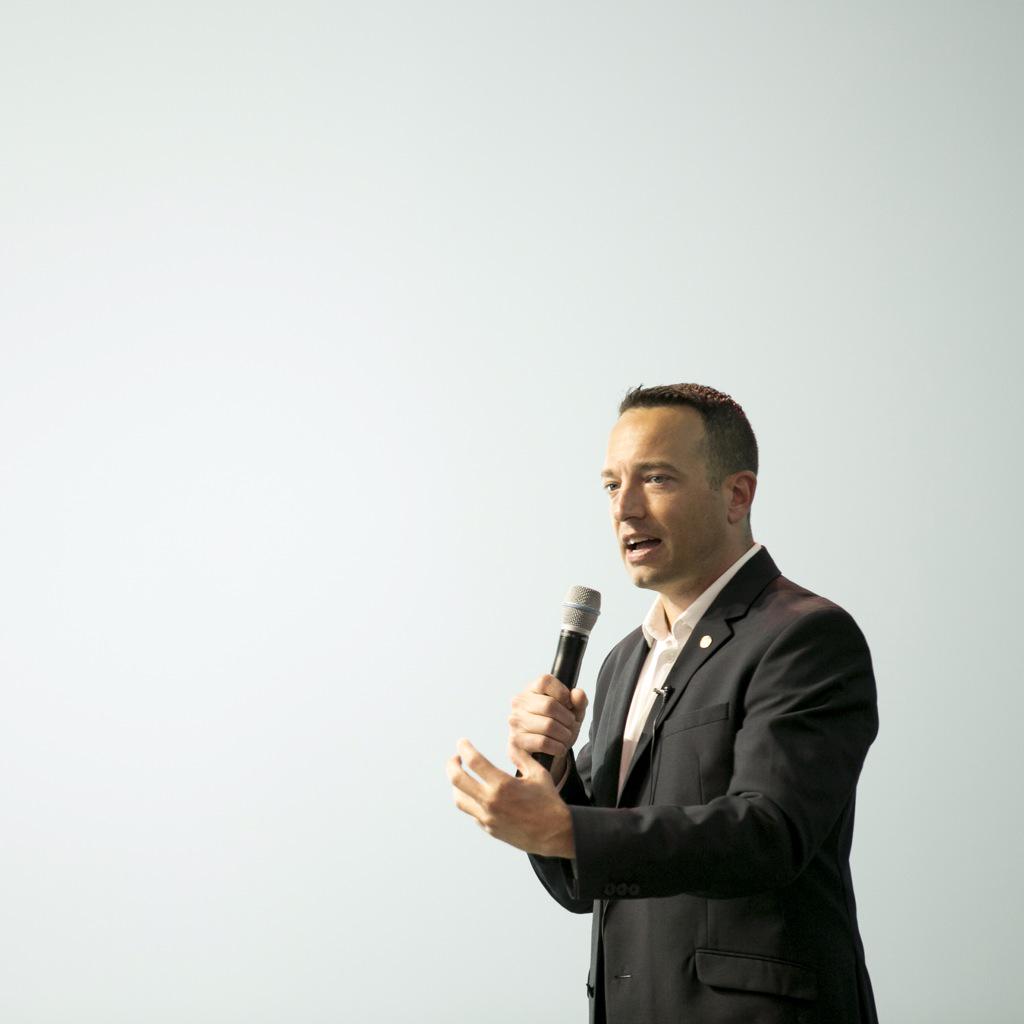
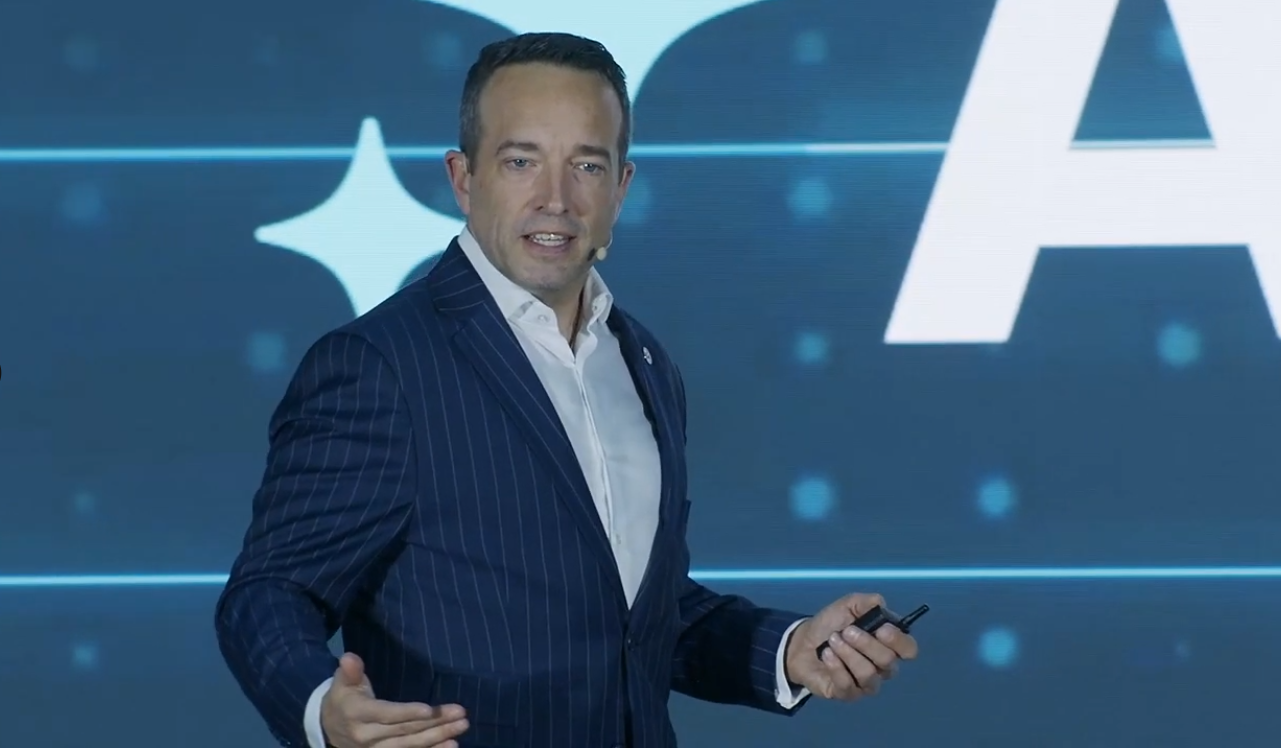
Shane Gibson AI Keynote Speech from Sydney Australia
There’s a strange tension in the room every time artificial intelligence comes up in a sales conversation. I’ve seen it in boardrooms, in workshops, and even in the hallway conversations afterward. People are clearly fascinated by what AI can do, but there’s also a hesitation that sits just under the surface. It feels powerful, a little unpredictable, and for many, a bit unsettling.
Most of the conversations I’m having with sales leaders right now sit right in that space. They’re trying to balance curiosity with caution, and more importantly, they’re trying to figure out what this actually means for how their teams operate day to day. So rather than jumping too far ahead, I find it more useful to start with a practical question.
What can we actually do with AI today that improves sales performance?
What the Data Is Telling Us (And What It Isn’t)
There are a couple of statistics that tend to grab attention quickly. One study showed that 41% of companies expect 5 to 25% of sales roles to be replaced by AI in the next 24 months, while 54% expect 26 to 75% of roles to be automated. On the surface, those numbers can sound like we’re heading toward a significant reduction in sales teams, and I’ve had more than a few leaders react that way initially.
But that’s not what I’m seeing in practice.
Across the enterprise organizations I work with, the shift is much more subtle. It’s not that companies are deciding to reduce headcount overnight. What’s actually happening is that when someone leaves, leaders are pausing and asking a different question. Instead of automatically replacing that person, they’re asking whether AI can handle a meaningful portion of the work that role used to require. I was in a session recently where this came up repeatedly. Each time hiring was mentioned, the conversation shifted to whether the role could be redesigned with AI at the center.
So what we’re really seeing is not the replacement of people, but the replacement of tasks, and that distinction changes everything.
The Real Shift: From Doing the Work to Managing the Work
When we hear that 26% to 75% of roles may be automated, what it really means is that a large portion of what fills the average sales day today will no longer need to be done manually. The work itself doesn’t disappear, but how it gets done changes, and that naturally shifts the role of the salesperson.
In many of the organizations I’m working with, sales professionals are starting to move into a position where they are guiding and managing AI tools rather than being consumed by process. They’re becoming decision-makers supported by systems instead of operators buried under them. In some cases, I’ve seen teams where top performers are now spending significantly less time inside the CRM and more time actually engaging with clients and opportunities.
And in an ideal world, that’s exactly where they should be.
Let’s Be Honest About What Salespeople Actually Hate Doing
There’s an old saying in sales that nothing happens until someone sells something. These days, the version I hear more often from teams is that it didn’t happen unless it’s in Salesforce. It usually gets a laugh, but it reflects a real frustration that shows up across industries.
I’ve sat with sales teams where highly capable people were spending hours each week updating records, chasing internal reporting requirements, and doing work that had very little to do with actually advancing a deal. One leader I worked with recently told me that their team was spending more time managing the system than using it to make decisions, which is the exact opposite of what it was designed for.
John Ferrara once joked that they call it Salesforce because you have to force salespeople to use it, and there’s a reason that line sticks. The issue isn’t the platform itself. It’s that we’ve been asking people to do work that doesn’t align with their strengths or where they create the most value.
Where AI Actually Starts to Make Sense
This is where AI becomes practical in a way that sales teams can actually feel. It’s not about replacing people, it’s about removing the weight of low-value work from their day so they can focus on what they’re actually good at.
Today, AI is already being used for things like email generation, lead scoring, sales intelligence, and conversation analysis. I’ve seen teams use it to reduce hours of manual work down to minutes, especially when it comes to summarizing calls or identifying next best actions. What’s interesting, though, is where most organizations start.
When I ask senior executives how they’re using AI, the first answer I get is almost always about writing emails. It’s a useful entry point, but it’s only scratching the surface. The real impact shows up when AI starts to influence how decisions are made and how opportunities are prioritized.
When that happens, the results begin to compound. One study showed that 83% of sales professionals saw an increase in average deal size when using AI, while win rates increased by 41% and sales cycles shortened by 30%. Those are meaningful shifts in performance, not small incremental gains.
Why Most AI Initiatives Are Still Failing
An MIT study found that 9 out of 10 AI pilots are failing inside major organizations. From what I’ve seen, it’s rarely a technology issue. It’s how companies approach it.
I worked with a large enterprise that had spent eight months “implementing AI.” Plenty of strategy, plenty of alignment, but no real pilot in market.
They were still getting ready to get ready.
What this usually looks like:
- Committees stacked on top of committees
- Months of planning without testing
- Trying to get everything right before starting
- Internal alignment over real-world action
Meanwhile, the teams making progress are doing the opposite. They pick one use case, test it quickly, learn from it, and expand.
In this space, momentum beats perfection every time.
AI as an Ironman Suit, Not a Replacement
There’s a metaphor I often use when I’m explaining this to sales teams. If I had to compete in a world where AI is becoming more capable every day, I wouldn’t want to do it without support. I’d want an advantage. I’d want something that amplifies what I’m already capable of doing.
I’d want an Ironman suit.
Tony Stark doesn’t disappear when he puts the suit on. He’s still making the decisions, still driving the outcomes, but now he has access to more information and greater capability. The technology extends him, it doesn’t replace him.
That’s how I think we need to look at AI in sales. It’s not about removing the human element. It’s about strengthening it. It allows strong sales professionals to think more clearly, connect more effectively, and solve problems at a higher level because they’re no longer weighed down by tasks that don’t require their judgment.
The Human Advantage Isn’t Going Away
There’s also a technical reality that often gets overlooked in these conversations. The human brain operates on roughly 12 watts of power. To replicate that level of processing with current AI systems, we’d be looking at something in the range of 2.7 billion watts.
We’re not there yet.
And even as technology continues to evolve, the human element in sales remains critical, especially in complex environments where trust, context, and judgment play a central role. I’ve yet to see an AI system navigate a high-stakes conversation with a client where multiple stakeholders, competing priorities, and unspoken concerns are all in play at the same time.
That’s still very much human work.
The Rule That Makes AI Work
So with all of this in mind, there’s one principle I come back to consistently, both in my own work and with the teams I advise.
Start with a human spark and finish with a human fingerprint.
If you go into an AI tool cold and ask a question, what you’ll typically get back is an average answer. It’s built from a wide range of sources, each with its own assumptions and context. And what I’ve noticed, both personally and with clients, is that the less familiar you are with the topic, the more convincing that answer tends to sound.
That’s where people get into trouble.
The value doesn’t come from asking AI to think for you. It comes from using it to sharpen your thinking, to challenge it, and to refine your perspective before you bring it back into the real world.
Where This Leaves Us
If we step back, the opportunity with AI in sales is not about doing more. It’s about doing less of the work that doesn’t move the needle and more of the work that does. It’s about creating space for better conversations, stronger relationships, and more thoughtful problem solving.
If you’re looking at this from a practical standpoint, there are a few places to start:
Audit where your team is actually spending time
Sit down with your team or review a typical week and identify where time is going. Look specifically for tasks that don’t require human judgment, creativity, or relationship-building. That’s your starting point for AI.
Pick one low-value task and run a small AI pilot
Don’t try to transform everything at once. Choose one area, such as call summaries, CRM updates, or lead research, and test how AI can handle it. Keep it simple and measurable.
Reinvest that time into higher-value conversations
When AI frees up time, be intentional about where it goes. Redirect it toward discovery calls, deeper account planning, and relationship development, where your team actually creates value.
Train your team to think before they prompt
Before using any AI tool, have your team define what a great outcome looks like. Whether it’s an ideal client profile, a call structure, or a value proposition, clarity upfront will dramatically improve results.
Start building your own “Ironman suit”
Layer AI into your workflow step by step. Combine tools that support how your team already works, rather than forcing them into new processes. The goal is to enhance performance, not create more complexity.
The technology is moving quickly, and that’s not going to slow down. What will separate high-performing teams from the rest is not who adopts AI first, but who integrates it in a way that strengthens what makes them effective in the first place.
Use AI to clear the path, then step forward and do the work that actually matters.