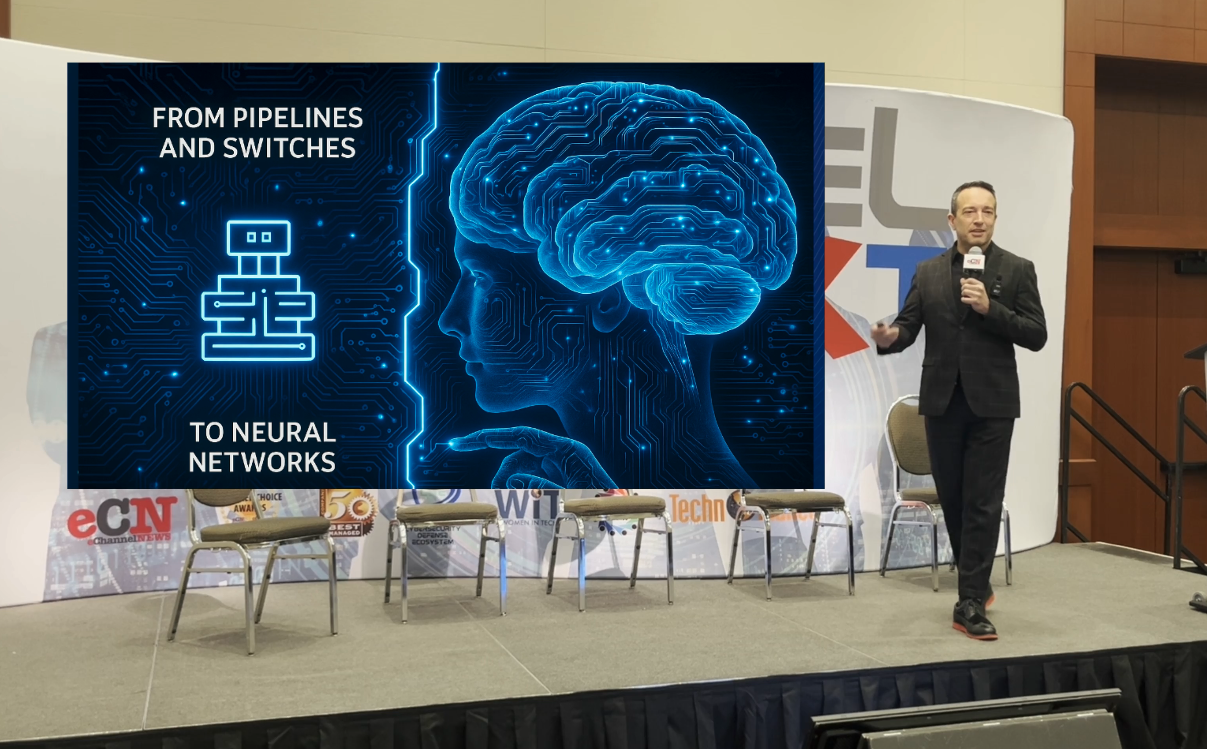

Based upon Shane Gibson’s AI for Sales Keynote
For years, most sales organizations hired and trained around one core idea: sales mastery. Can this person prospect? Can they open a conversation? Can they run discovery, present a solution, handle objections, close the deal, and keep the client? Those skills still matter. They are still the center of the profession, but they are no longer the whole job.
What has changed is not the need for sales fundamentals. What has changed is the stack of competencies that now sits on top of those fundamentals. A modern sales professional needs to do more than sell. They need to communicate across digital channels, build trust in public and private online spaces, understand the tools that drive the sales process, and bring human judgment to situations that no workflow or prompt can fully solve.
The Sales Competency Map for 2026 and Beyond – AI, EQ and Sales Mastery
- Sales mastery is still the core.
- Technology fluency is now mandatory.
- Human skills have become the real differentiator.
If you miss that third point, you can build a very efficient sales team that still loses important deals.
A brief video excerpt on the New Sales Competency Map from Shane Gibson’s AI in Sales Keynote:
The old model was simple. Keep salespeople focused on customers and keep them away from the technical complexity. Let someone else handle systems, process design, integrations, and tooling. That might have worked when technology played a supporting role. It does not work when the sales motion itself is powered by platforms, automation, AI, CRM workflows, social channels, and data.
Sales is now tech-driven and we need to learn as a connected team if we are going to keep up.
That does not mean every salesperson needs to become a developer. It does mean they need enough technology intelligence to operate effectively, make sound decisions, and adapt quickly. When I am working with leading sales organizations that combination of digital-first thinking and tech-literate culture shows up repeatedly as a competitive advantage, not a nice extra. The organizations that thrive are the ones that pair customer-centric selling with an agile, digitally capable culture.
Virtual Soft Skills
A modern seller needs to understand that a message that works in email may fail completely in text. A LinkedIn conversation should not feel like a copied email blast with line breaks. A voice note, a DM, a Zoom call, and a proposal deck each carry different expectations. The best virtual communicators understand that channel shapes tone, pace, and trust.
That requires more than technical skill. It requires virtual soft skills.
Social Networking and Social Selling with AI
You need to know how to read context without being physically in the room. You need to know when brevity signals confidence and when it signals laziness. You need to know when a prospect wants speed and when they want thoughtfulness. In social selling, this is not about using digital platforms as a megaphone. It is about using content and conversations to create an environment where trust can form and action can follow.
That is why sales professionals now need competency in social networking as well. Not networking in the shallow sense of collecting contacts, but building relevant relationships in the right communities. LinkedIn may matter for one business. TikTok, Instagram, or niche industry groups may matter for another. The platform is secondary. The real question is whether the salesperson knows how to show up in a way that is useful, credible, and human. AI used effectively can help sellers create and stay on top of content making agents and tools that can do what only a team of social media pros could do previously.
This is where many teams get it wrong. They think modern selling means adding tools and templates. In reality, modern selling means adding judgment.
Take a small business sales team. They may not have a CTO. They may not have a sales operations department. They may not have a RevOps specialist evaluating every new platform. So who discovers a useful sales tool? Often it is the curious salesperson. The rep who finds a prospecting platform, tests it, connects it to LinkedIn workflows, figures out how to sync activity with the CRM, then uses AI to improve outreach without turning every message into bland automation.
That person is not just selling. They are designing micro-systems.
Years ago, some leaders would have seen that as a distraction. Today, it is often a growth advantage.
The proactive, curious salesperson who can evaluate tools, learn software quickly, interpret what the data is telling them, and improve the process is incredibly valuable. In lean organizations especially, that person becomes part seller, part strategist, part systems thinker. That does not replace sales mastery. It multiplies it.
Social and digital tools are powerful, but only when they are tied to clear business purpose, real conversations, and measurable outcomes. Hype is easy. Useful implementation is harder. The strongest professionals are the ones who cut through novelty and ask, “Will this help us connect better, solve problems faster, and create more value?”
But here is the more important truth. Technology fluency alone will not future-proof a sales career.
Right Brained Sales Skills can AI Proof Your Sales Career
The safest place for a human in sales is what we might call right-brain selling. That is the zone where empathy, creativity, political awareness, leadership, and nuanced judgment live. These are the skills AI can imitate on the surface but cannot truly embody.
AI can draft a decent email. It cannot genuinely care.
AI can summarize a buying committee. It cannot feel the tension in the room when two stakeholders want different outcomes and the real objection has not yet been spoken aloud.
AI can suggest next steps. It cannot decide when it is time to break the script because the script is making the deal worse.
That matters more in complex B2B selling than many leaders realize. In high-value deals, there are often multiple stakeholders, competing agendas, internal politics, hidden fears, and changing priorities. Closing those opportunities requires more than process discipline. It requires the ability to listen deeply, map influence, adapt in real time, and move people forward without forcing the process. Shane’s work on larger deals and key accounts consistently reinforces that long-term success comes from understanding stakeholder networks, creative problem solving, trust, and meeting commitments over time.
This is where sales leaders need to rethink what they hire for.
If you only hire for polish, confidence, and traditional closing ability, you may end up with a team that performs well in familiar conditions and struggles as soon as the environment shifts. If you hire for curiosity, adaptability, digital literacy, empathy, and initiative, you are more likely to build a team that can evolve with the market.
The strategy is constant evolution
There is no endpoint now. There is no moment when a salesperson can say, “I’ve learned the playbook, so I’m done.” Sales has become an ongoing process of innovation. New channels appear. Buyer expectations change. AI reshapes workflows. Data becomes more available. The best teams do not resist that. They build a culture where learning is part of the job.
That culture matters as much as the talent.
If a sales culture punishes experimentation, people will hide what they are learning. If it treats technology as somebody else’s department, salespeople will fall behind. If it rewards canned compliance instead of thoughtful initiative, the team may become efficient but fragile.
On the other hand, if the culture rewards self-development, problem solving, responsible use of tools, and real human connection, something powerful happens. Salespeople stop waiting to be saved by the next platform and start becoming smarter operators. They build confidence not because they memorized another script, but because they can think, adapt, and create value in motion.
The future belongs to professionals who can blend all of it. They understand the fundamentals. They are comfortable with the tools. They can interpret data without becoming robotic. They can use AI without sounding artificial. They know when to follow the process and when to challenge it. Most of all, they understand that trust is still the asset that closes the deal.
The tools have changed. Human nature has not.
So if you are hiring, train for technology intelligence and curiosity, not just charisma. If you are leading a team, build a culture that rewards learning and experimentation. If you are a salesperson, do not treat tech fluency as optional or empathy as soft. In the years ahead, those two capabilities together may define who thrives and who gets left behind.
4 ways to build this into your sales culture now
- Audit your team’s real digital competency.
Don’t ask whether they use the tools. Ask whether they understand why a channel works, how to adapt messaging by context, and how to connect systems to improve outcomes. - Train for tech judgment, not just tool usage.
Anyone can sit through a software demo. Focus on helping your team evaluate platforms, interpret data, and decide what belongs in the workflow and what does not. - Coach right-brain selling deliberately.
Teach empathy, discovery, stakeholder mapping, creative problem solving, and how to navigate complex group dynamics. These are not abstract traits. They are trainable business skills. - Reward curiosity and self-development.
Your best future sellers may be the ones who test responsibly, learn fast, and improve the process without waiting for permission every step of the way.
Build a sales team that is both technologically fluent and deeply human.